

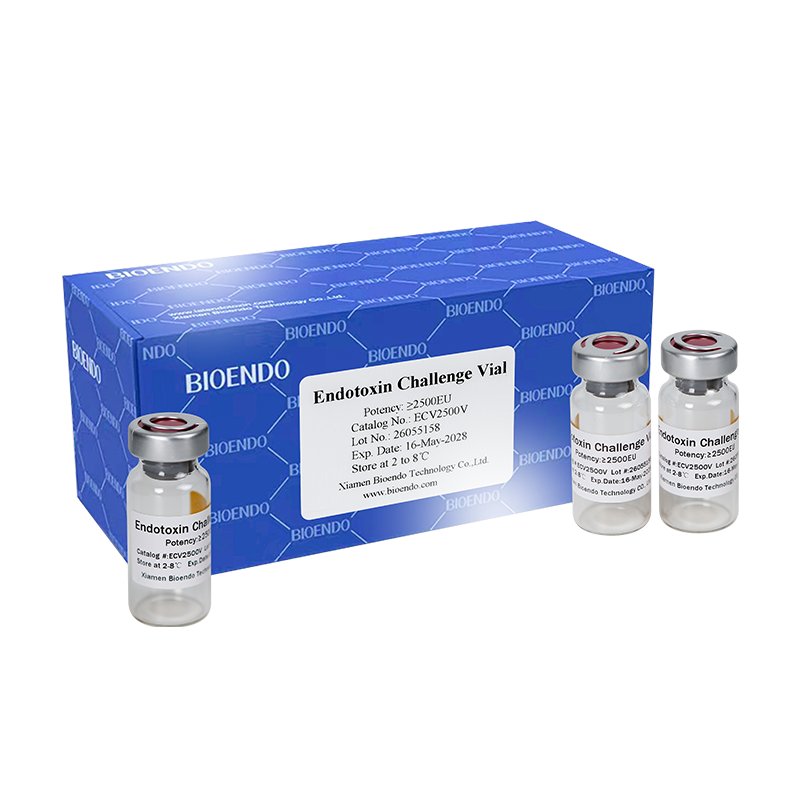
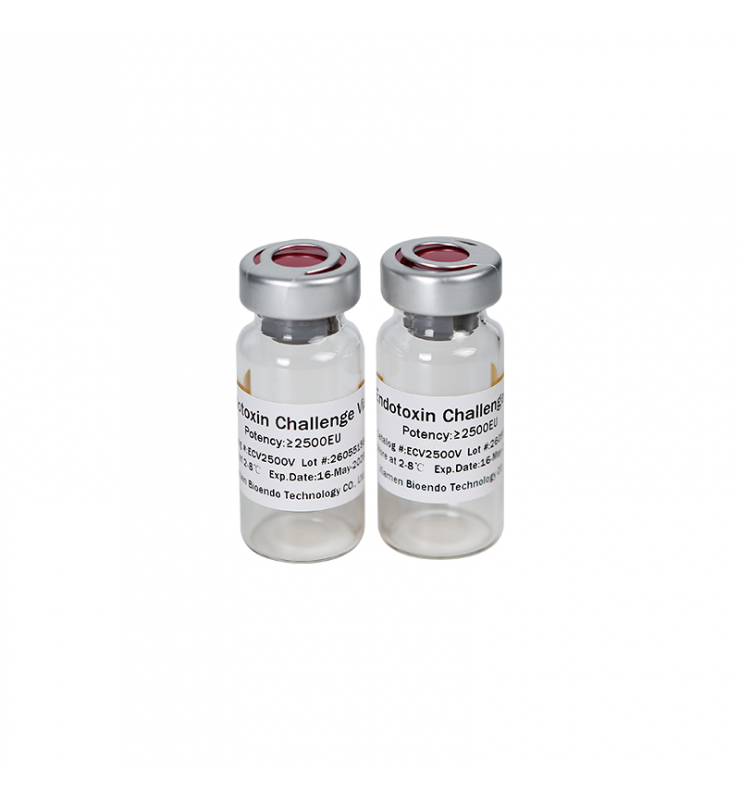
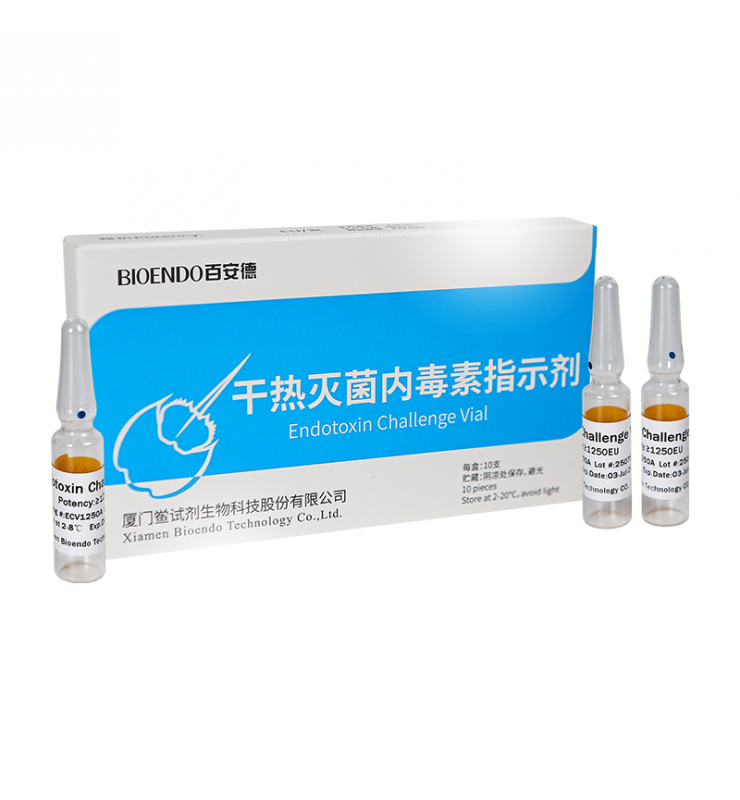
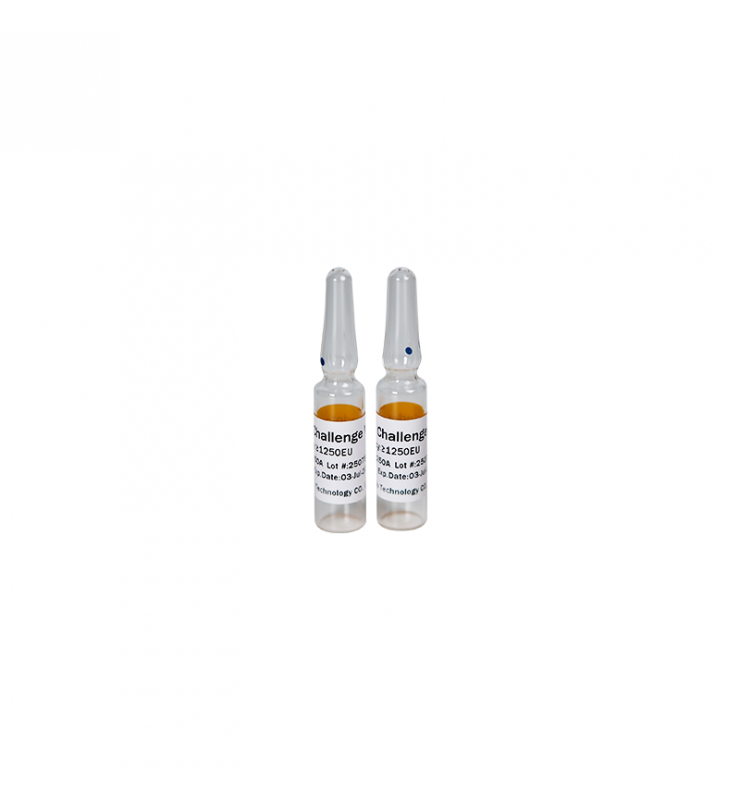
Dry Heat Sterilizer, an important equipment for manufacturing solution for injection, must be verified based on “GMP Annexes” (2011 version). According to “General Chapter 1421 Sterilization Methods: Dry Heat Sterilization” on Chinese Pharmacopoeia (2025 version), Validation Test for Bacterial Endotoxins Inactivation is adopted to verify the effectiveness of depyrogenation process. Put items containing at least 1000 EU in the sterilizer, and verify that at least 3-log reduction in endotoxin content reaches after depyrogenation process. Sterilization and Sterility Assurance of Compendial Articles also indicate to use Endotoxin Challenge Vial to evaluate the effectiveness of depyrogenation process.
Bioendo Endotoxin Challenge Vial (Endotoxin Indicator), packed with heat-resistant materials, could be put in sterilizer with temperature as high as 260 - 300℃ directly. They are easy and safe to use.
| Catalog No. | Description & Kit Contents | Specifications / Pack Size |
| ECV1250V | Endotoxin Challenge Vial | 1000 - 10000 EU/Vial, 10 Vials/Pack |
| ECV1250A | Endotoxin Challenge Vial | 1000 - 10000 EU/Vial, 10 Ampoules/Pack |
| ECV2500V | Endotoxin Challenge Vial | 2000 - 10000 EU/Vial, 10 Vials/Pack |
| ECV2500A | Endotoxin Challenge Vial | 2000 - 10000 EU/Vial, 10 Ampoules/Pack |
| ECV1250VR | Endotoxin Challenge Vial | |
| ECV2500VR | Endotoxin Challenge Vial | |
| ECV100000V | Endotoxin Challenge Vial | 50000 - 200000 EU/Vial, 10 Vials/Pack |
| ECV1000000VR | Endotoxin Challenge Vial |
The sensitivity of Lyophilized Amebocyte Lysate and potency of Control Standard Endotoxin are assayed against USP Reference Standard Endotoxin. The Lyophilized Amebocyte Lysate reagent kits come with product instruction, Certificate of Analysis, and MSDS.
Note: For other sizes/specifications not listed above, please contact our customer service team.
Email: Eve@bioendo.com
Tel: +86 18065928551
01
Pharmacopoeia
Compliant
Compliant
Meets the requirements of the Chinese Pharmacopoeia (2025 version), with an endotoxin level above 1,000 EU/vial.
02
High Temperature
Resistant
Resistant
Can be placed directly in a sterilizer at temperatures around 300°C.
03
Stable Endotoxin
Level
Level
Compatible with Gel Clot and quantitative LAL/TAL reagents for endotoxin detection.
04
Easy Operation
Can be placed directly in sterilizers or with items requiring depyrogenation.
05
Flexible
Formats
Formats
Available in ampoule or vial formats, with endotoxin levels up to 100,000 EU/vial.
AMPOULE vs VIAL
Choose the format that best fits your depyrogenation workflow.
FORMAT 01
Endotoxin Challenge Ampoule
Traditional ampoule format
FORMAT 02
Endotoxin Challenge Vial
Convenient vial format for pharmaceutical workflows
01
Direct Encapsulation
Directly encapsulated in an ampoule.
01
Direct Encapsulation
Directly encapsulated in a vial.
02
Post-Depyrogenation
After depyrogenation, open the ampoule and add Water for BET for dilution.
02
Familiar Format
Uses the same type of vial commonly used by pharmaceutical manufacturers.
03
Mixing
The solution may be prone to spillage during vortex mixing.
03
Easy & Safe Handling
Easy and safe to open, with convenient vortex mixing.
04
Handling
The small ampoule opening may make certain operations less convenient.
04
Direct Sterilization
Can be placed directly in a dry heat sterilizer.
05
Pharmaceutical-Compatible Format
Available in vials consistent with those commonly used in pharmaceutical applications.
1. Potency Verification
(1) Randomly select 1–2 unheated ECVs and dissolve them in 1.0 mL of water for bacterial endotoxin testing.
(2) Dilute the resulting solution by factors of P/2λ, P/λ, 2P/λ, and 4P/λ, and determine the potency using the semi-quantitative gel clot method as described in the Chinese Pharmacopoeia Appendix on Bacterial Endotoxin Testing.
2. Experimental Procedure
(1) The test is conducted under full-load conditions. Place 1–2 ECVs at each cold spot in the oven and run the actual dry heat pyrogen removal program.
(2) Dissolve the oven-dried ECVs in water for bacterial endotoxin testing.
(3) Dilute this solution n-fold:
n = P / (Rs · λ)
Note: P is the labeled ECV value; Rs is the endotoxin potency reduction factor specified in the evaluation standard; λ is the labeled sensitivity of the limulus reagent.
(4) If the potency is determined using a gel semi-quantitative assay, the solution must be diluted by factors of P/(Rs·2λ), P/(Rs·λ), 2P/(Rs·λ), and 4P/(Rs·λ), respectively.
(5) Determine the endotoxin concentration of the solutions from step 2.3 or 2.4 using a gel-clot limulus reagent with a sensitivity of λ (or a quantitative limulus reagent), and calculate the potency of the heated ECV.
(6) The potency reduction factor R is calculated as:
R = (Average potency of unheated ECV) / (Average potency of heated ECV)
If R is greater than 1,000 (or 10,000, depending on the evaluation criteria), the dry heat pyrogen removal process is considered to have passed the standard; otherwise, it fails.
ECV100000V contains a high endotoxin level and can be diluted to the required endotoxin concentration for verification of dry heat depyrogenation processes for medical devices and pharmaceutical applications.